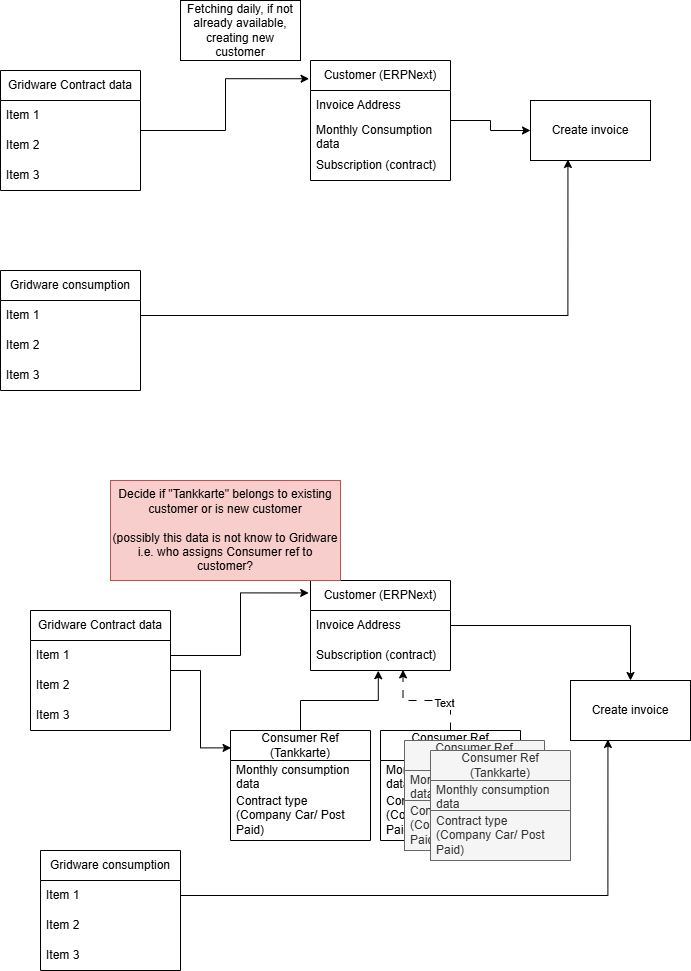
Datenstruktur Gridware mit ERP Next - ER Modell + Use Cases
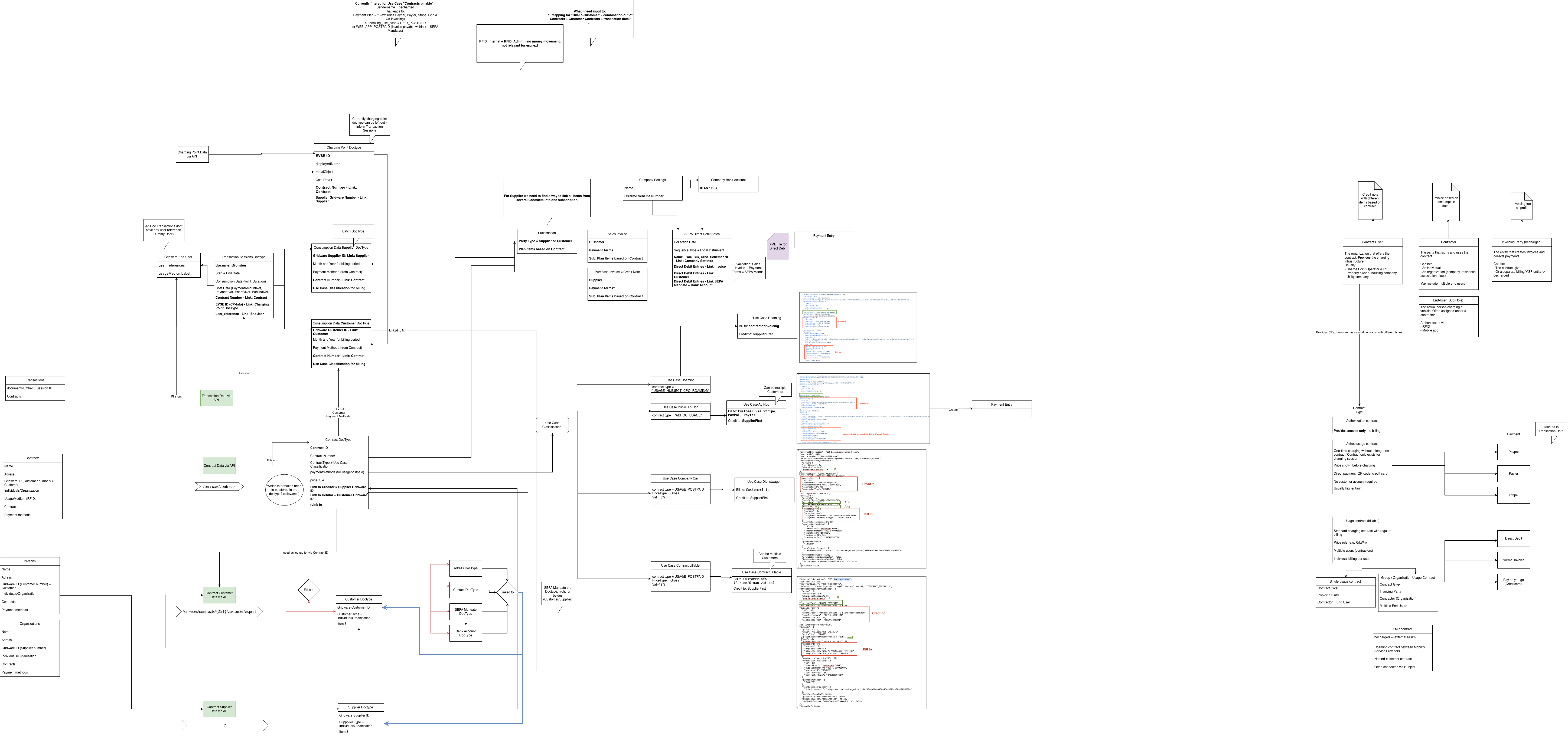
RULES:
Wer erhält Rechnung: Contractor = Customer (Organisation oder Individuum) /Vertragskunde oder Ad-Hoc-Endkunde
Wer bekommt eine Gutschrift/Auszahlung? = Supplier (CPO) oder Customer (bei Dienstwagen)
Wer nutzt nur? = End User (muss oft nur für Zuordnung/Reporting existieren)
Geldströme:
A) Einnahmen (Money-In)
- Endkunde / Vertragspartner zahlt für Ladevorgänge
- via Invoice/SEPA, oder Direct Payment (Payter/Stripe/PayPal), oder Pay-as-you-go
- Contract Giver zahlt für Ladepunkte/Service (Miete/Betrieb/Backend/Hardware)
B) Ausgaben (Money-Out)
- becharged zahlt Gutschrift an den Contract Giver
- typischerweise “Energieumsatz / Standortanteil” (Pass-through)
- Optional: becharged zahlt Erstattungen
C) Marge
becharged verdient in der Regel nicht am “reinen Durchlauf” (Energie), sondern an:
- Service-/Plattformgebühren: M100035: Kosten Betriebsführung 10%
- Abonnement-Zahlungen: Charge & Share
- Hardware Ladepunkt-Gebühren: Bspw. M100213: Betriebsführung von Ladeeinrichtungen
Wichtig für ERP: sauber trennen
- Pass-through (durchlaufender Posten → Auszahlung später)
- Eigener Umsatz (Fee)
USE CASES :
USE CASE 1: Laden im Unternehmen/beim Mandanten (Mitarbeiter/Vertragskunde) - Contract "Usage Contract (billable)"
BEISPIEL Unternehmen: https://cloud.becharged.de/backoffice/contracts/251
BEISPIEL Kunde:
BEISPIEL Wohngesellschaft/Vermieter: https://cloud.becharged.de/backoffice/contracts/306
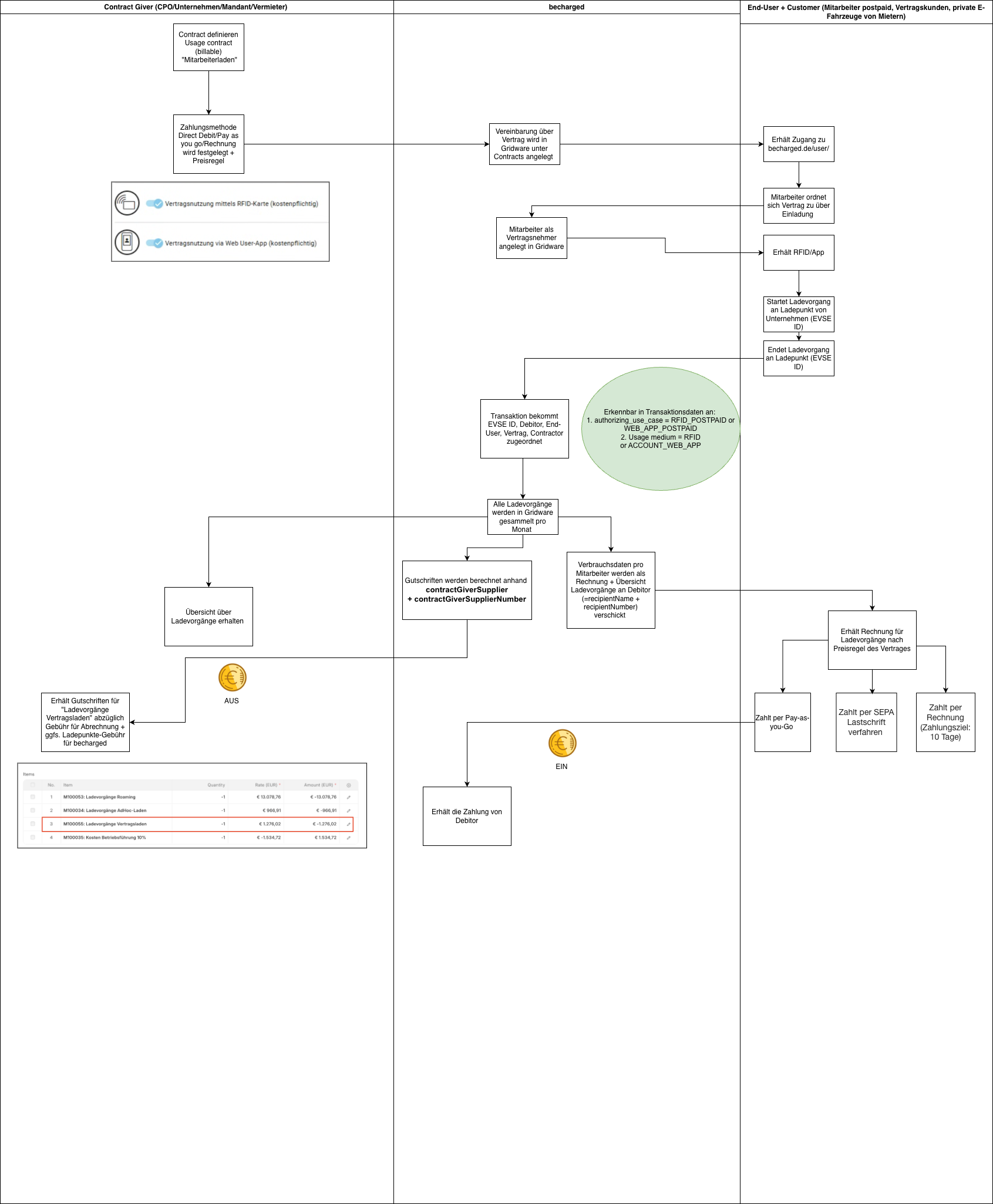
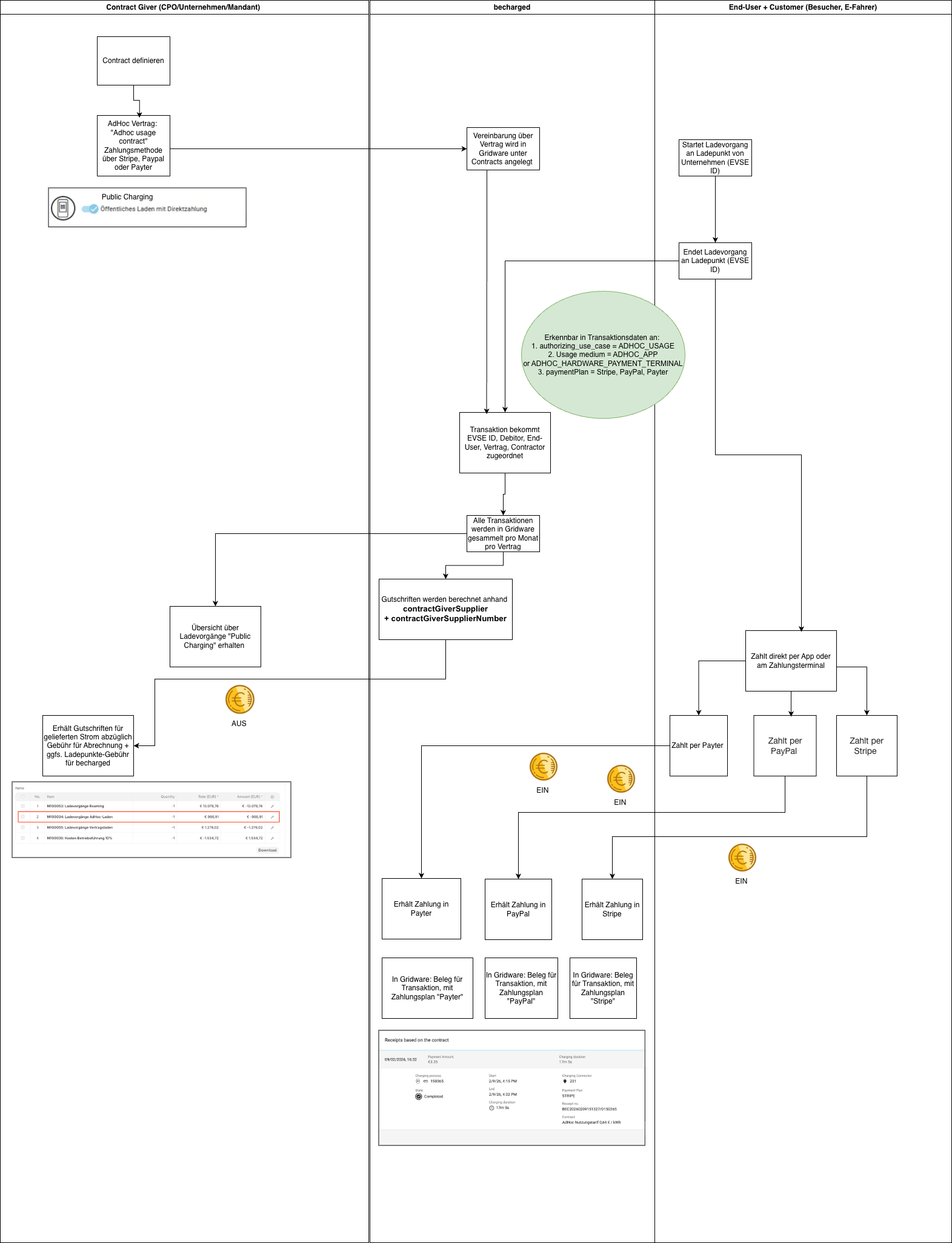
USE CASE 2: Laden im Unternehmen/beim Mandanten (Besucher/E-Fahrer) - Public Charging - Contract: "Adhoc usage contract"
BEISPIEL: https://cloud.becharged.de/backoffice/contracts/286
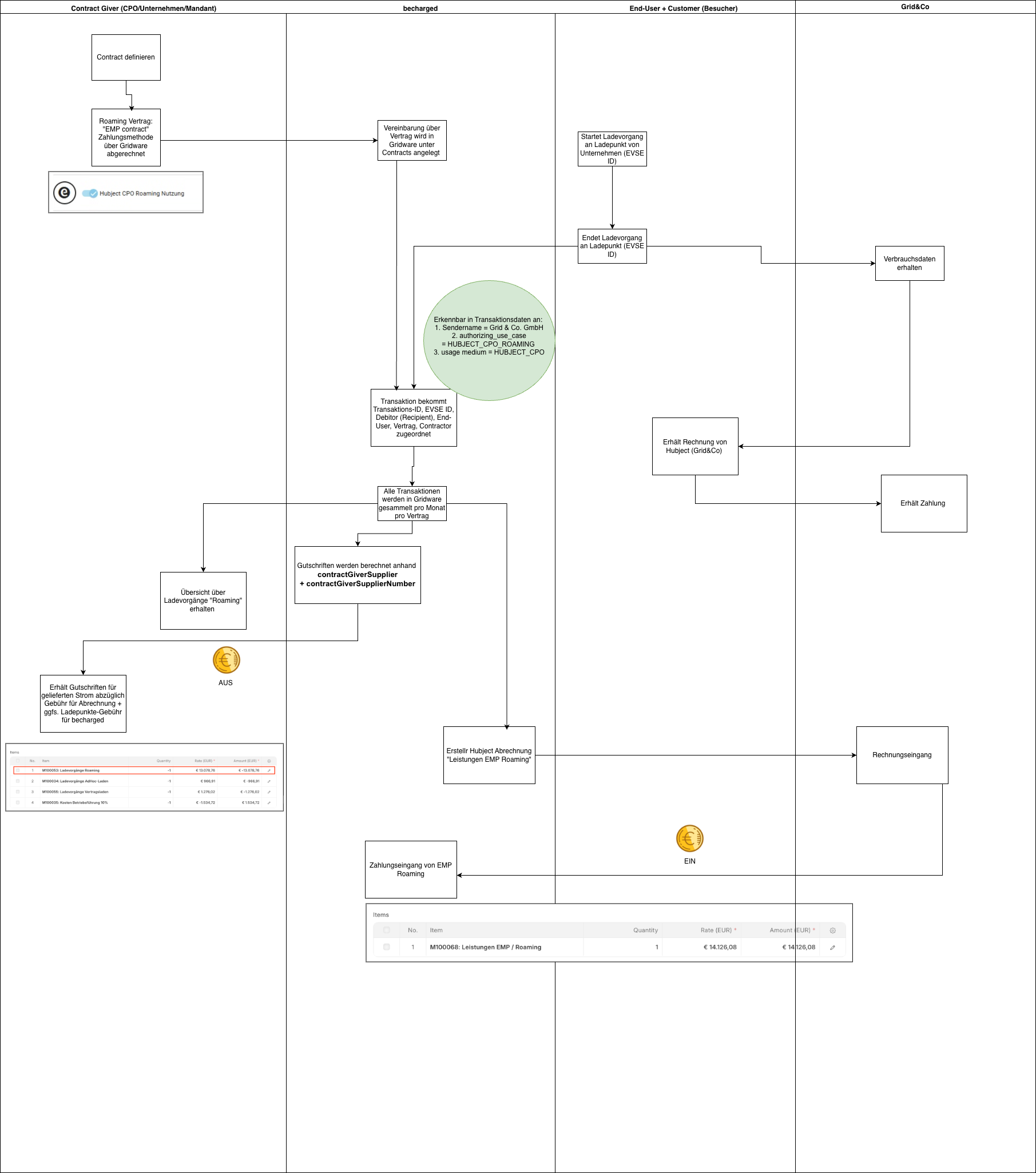
Use Case 3: Laden im Unternehmen/Kunde (Besucher/E-Fahrer) - Roaming über Hubject EMP-Vertrag
BEISPIEL: ?
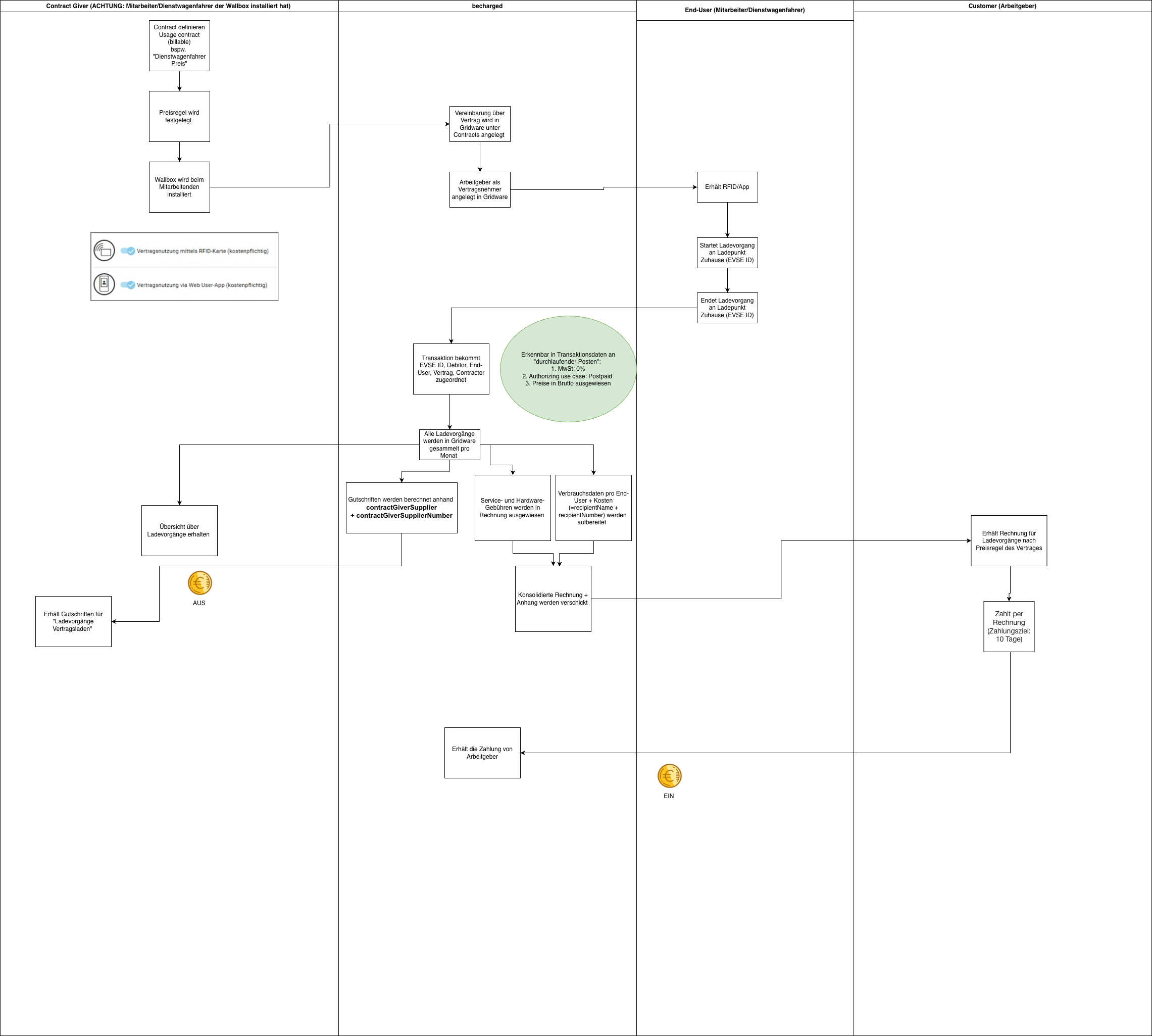
USE CASE 4: Dienstwagen
BEISPIEL: https://cloud.becharged.de/backoffice/contracts/484
TRANSLATE:
RULES:
Who receives the invoice: Contractor = Customer (organization or individual) / contract customer or ad-hoc end customer
Who receives a credit note / payout: Supplier (CPO) or Customer (in the company car use case)
Who only uses the service: End User (often only needs to exist for assignment/reporting)
Money flows:
A) Revenue (Money-In)
-
End customer / contract partner pays for charging sessions
via invoice/SEPA, or direct payment (Payter/Stripe/PayPal), or pay-as-you-go -
Contract giver pays for charging points/services (rent/operations/backend/hardware)
B) Expenses (Money-Out)
-
BeCharged pays a credit note to the contract giver
typically “energy turnover / site share” (pass-through) -
Optional: BeCharged pays reimbursements
C) Margin
BeCharged typically does not earn on the “pure pass-through” (energy), but on:
-
Service/platform fees: M100035: operations management cost 10%
-
Subscription payments: Charge & Share
-
Hardware/charging point fees: e.g. M100213: operations management of charging infrastructure
Important for ERP: separate clearly
-
Pass-through (clearing account → payout later)
-
Own revenue (fee)
USE CASES:
USE CASE 1: Charging at the company / at the client (employee / contract customer) — Contract “Usage Contract (billable)”
Example company: https://cloud.becharged.de/backoffice/contracts/251
Example customer:
Example housing association/landlord: https://cloud.becharged.de/backoffice/contracts/306